The instinct, when payment costs start to sting, is to take fewer card payments. Put a minimum spend on the till. Mention that cash is easier. Quietly move the terminal further from the counter.
It is the one move on the list that reliably costs more than it saves. Customers who cannot pay the way they intended buy less, or buy elsewhere, and the sale you lose is worth several times the fee you avoided. Your staff end up policing a rule they did not write. And the underlying cost has not changed at all. It has simply been converted into friction and handed to the person standing in front of you.
The good news is that there are four levers that do work, and none of them require anyone to be told what they cannot use. They are listed below in the order you should work through them, which is not the same as the order of how much they are worth.
The rule this article follows
Make the cheaper way to pay easy. Never make the expensive way hard. Every one of the four levers below sits on the merchant's side of the counter, not the customer's, and that is deliberate. Payment costs are a supplier negotiation and an operations question. They are not a customer problem, and the moment you make them one you have started paying for them twice.
The four levers
Impact is how much the lever is worth. Effort is what it costs you to pull it. Work top to bottom, because each one produces information the next one needs.
Make the cheaper way to pay the easy way to pay
Domestic rails cost a fraction of what the card networks cost. PayNow moves money bank to bank without touching Visa or Mastercard, so no interchange applies at all, and every Singapore provider that publishes both prices it far below cards.
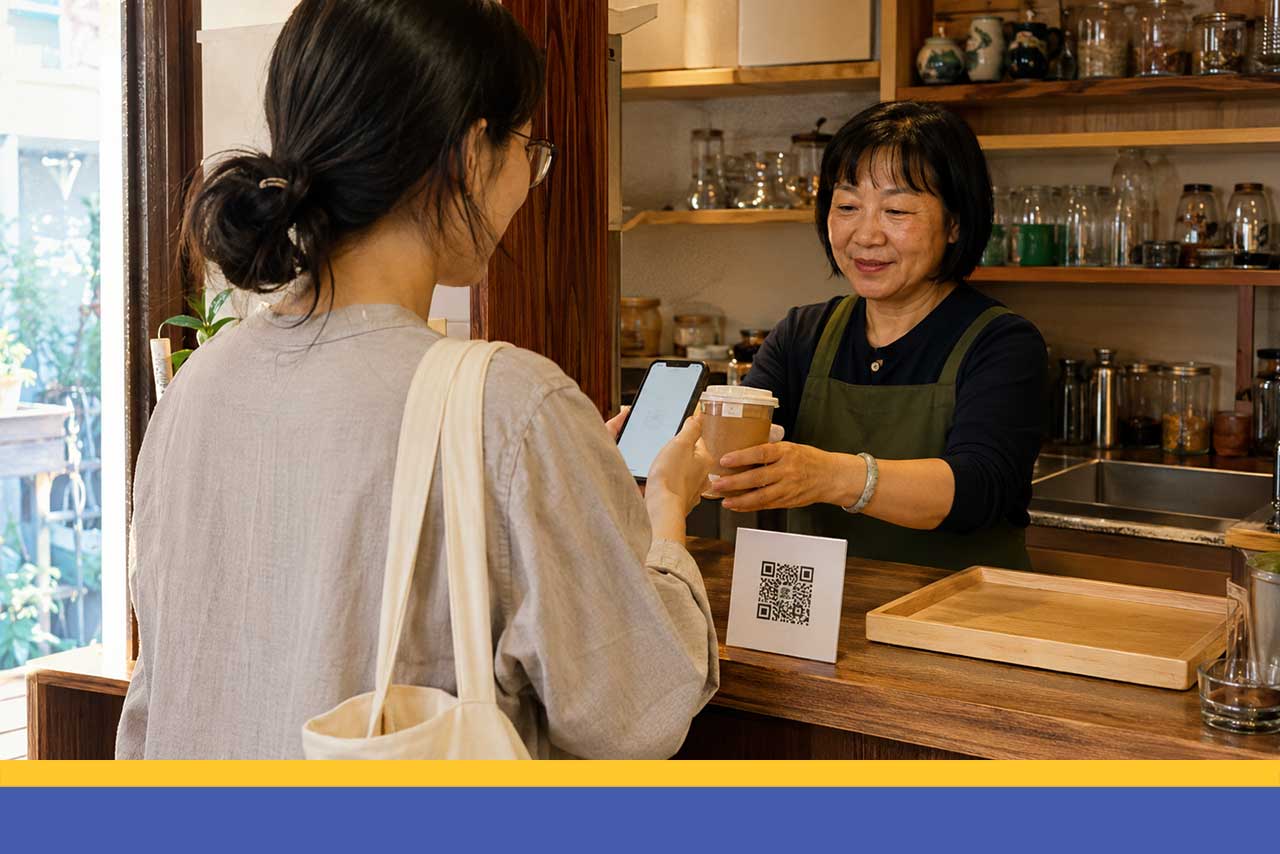
The lever is not removing card acceptance. It is removing friction from the cheaper option. A clear QR at the counter, staff who mention it without being asked, and a payment screen that shows it first rather than third. Most merchants have the capability already and have never made it visible.
Shift even a third of your volume and the saving compounds quietly across a year, without a single customer being told what they cannot use.
Payment mix · Impact high · Effort mediumAudit the charges that have nothing to do with your rate
Terminal rental, monthly minimums, compliance charges, per transaction fees and setup costs sit outside your processing rate entirely. They are set by your provider rather than passed through, and they are the least examined part of most merchant bills.
They also behave differently from your rate. A percentage costs you more when you are busy. A fixed charge costs you more when you are quiet, which is precisely when it hurts. Work out what your fixed charges cost you as a share of your worst month rather than your best.
This is the fastest lever on the list. It requires one careful read of your statement and one phone call, and it frequently produces a result the same week.
Fixed and ancillary fees · Impact medium · Effort lowNegotiate the one part of your rate that can move
Interchange and scheme fees are set by the card networks, not by your provider, and the published rates are identical for every provider in Singapore on the same transaction. Your provider's own fee is the only component they control, and it is therefore the only one worth negotiating.
Merchants who push on the total rate are asking someone to discount costs they do not own, which is why those conversations so often end in a token reduction. Merchants who ask what the provider's own fee is, and what would lower it, get a different conversation.
Volume strengthens your position. So does a clean dispute record, a longer term, consolidating outlets, and being prepared to actually move.
The provider's own fee · Impact medium · Effort mediumChange how you are charged, not just how much
The largest lever on this list is also the one merchants are least often offered. Under a blended rate, every card is charged at the same averaged percentage, so your cheap local debit sales quietly subsidise the expensive ones. Under Interchange++, each transaction is charged at what it actually cost, itemised into its three parts.
Whether that helps you depends entirely on your card mix, which is why it sits fourth. You cannot judge it until you know your effective rate, your average sale value and your split between card types, and the first three levers put those numbers in your hands.
It is also the lever that has historically been closed to smaller businesses. Providers set volume requirements, merchants below them stopped asking, and the model became something enterprises had and nobody else was shown. That requirement is not a rule of pricing, and it no longer applies here.
The pricing model · Impact high · Effort lowWhat shifting your mix actually looks like
The same customers, the same takings, a different default at the counter. Nobody was turned away and no card was refused.
| Share of takings | Domestic rails | Card networks |
|---|---|---|
| Today Domestic rails barely visible |
10 per cent | 90 per cent |
| After the QR moves to the front of the counter Same revenue |
35 per cent | 65 per cent |
A shift of that size is not unusual when the cheaper option stops being the third thing a customer notices. What changed was placement and habit, not policy. The people who wanted to tap a card still tapped a card, and the people who were always happy to scan finally saw where to do it.
Where to start, realistically
Nobody works through four levers in an afternoon. This is the sequence that fits around actually running a business.
This week
Read one statement properly. Total every deduction, work out your effective rate, and list the charges that do not move when your sales do. Half an hour, no permission needed from anyone.
This quarter
Make the cheap option visible and ask two questions. Put a domestic payment option in front of customers rather than behind them. Then ask your provider what their own fee is and which charges outside the rate they can move.
This year
Review the model itself. With three months of your own figures behind you, work out whether the way you are charged suits how you sell. Review it annually rather than once, because your card mix will not stay still.
What all four have in common
Every lever on this list points at your supplier, your operations or your own arithmetic. Not one of them points at your customer. That is not squeamishness, it is economics: the margin you protect by refusing a card is smaller than the margin you lose when the sale does not happen.
It also means none of this requires a difficult conversation with anybody except a provider, which is the one conversation on the list you are entitled to have.
Cheaper to accept. Never harder to pay.
Four levers. Not all four are yours
Tell us what you sell and roughly how your customers pay, and we will tell you which of the four is worth your time and which will not move the needle for a business like yours. Some of them you can pull without us.
Find out which levers apply to youFrequently asked questions
How can I reduce my card processing fees in Singapore?
There are four levers, and none of them involve refusing cards. Make lower cost domestic payment options easy to use, audit the fixed charges that sit outside your rate, negotiate the one component of the rate your provider actually controls, and review whether your pricing model suits your card mix. Work through them in that order, because the first three give you the figures needed to judge the fourth.
Is it cheaper to accept PayNow than cards?
Yes, by a wide margin at every provider that publishes both. PayNow moves money directly between bank accounts rather than across the card networks, so no interchange applies. Answering a parliamentary question for the sitting of 3 March 2026, the Chairman of MAS said international card schemes are generally higher cost, while domestic schemes such as NETS EFTPOS, PayNow and SGQR are “significantly lower in costs”.
Should I set a minimum spend for card payments?
Check your own merchant agreement before you do anything, because acquirer terms in Singapore address this directly and they vary. It is also worth exhausting the four levers first, since a minimum spend transfers the problem to your customer while the underlying cost stays exactly where it was. We cover the rules and the alternatives in a separate article in this series.
What fees can I actually get removed from my bill?
Usually the ones your provider sets rather than passes through: terminal rental, monthly minimums, setup fees, and sometimes per transaction charges. Interchange and scheme fees are set by the card networks and passed through, so they are not your provider's to discount. Ask your provider which charges are their own margin and which are passed through at cost, then concentrate on the first group.
Will switching payment providers actually save me money?
Sometimes, and less often than the headline rate suggests. A lower percentage attached to a heavier fee schedule can cost more than a slightly higher one with none. Work out your current effective rate, then price the competing offer across your own transaction profile including every fixed charge, and compare the two totals rather than the two percentages.
Which payment methods does QashierPay accept in Singapore?
QashierPay accepts Visa, Mastercard and AMEX, along with PayNow, GrabPay, ShopeePay, Atome and Alipay+ and other international e-wallets. In store card payments settle T+1. Qashier holds a Major Payment Institution licence from the Monetary Authority of Singapore.
Do I need to install an app to manage my payment costs?
No. QashierHQ runs in a web browser on any device, so your sales, fees and settlement records are available wherever you are. There is nothing to download and nothing to install.
Sources
The comparison between domestic schemes and the international card networks is drawn from the Monetary Authority of Singapore's written reply to parliamentary questions on Visa and Mastercard fees, for the sitting of 3 March 2026, answered by the Chairman of MAS. PayNow carries no interchange because it settles bank to bank rather than across the card networks; providers may still charge their own fee on it, which is why the rates published by each provider are the figures to compare. Reviewed August 2026.