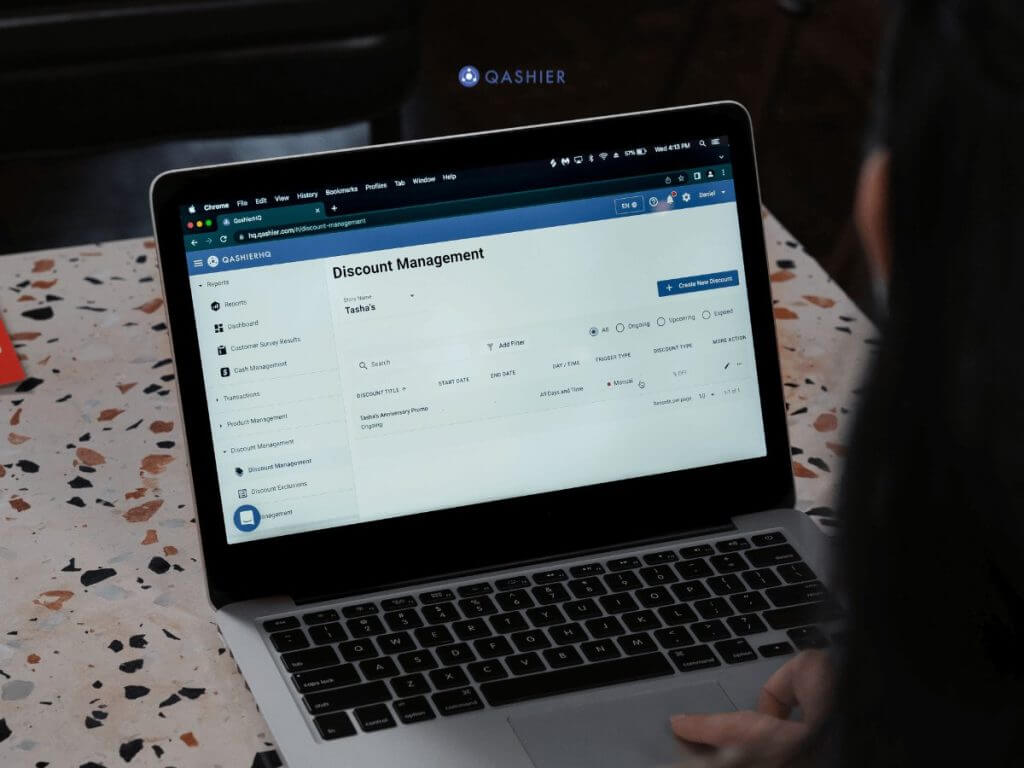
A POS system is a sales management system. The name comes from Point of Sale System, meaning the point at which a shop sells and takes payment — the system you usually see at the cashier's counter, in a shopping centre, a restaurant or an ordinary shop.
These days it is fair to say that a POS system is one of the things that lifts the running of a shop to a genuinely efficient level. Yet owners often overlook it, or have not yet realised how much it matters. Today Qashier will explain what a POS system is and what it does for your shop.
What is the difference between a POS system and a POS terminal?
POS system is the term used for the operating system, or for the whole front-of-house sales setup including the POS terminal — though in some places it means only the POS software, the shop management program. That software can run on a smartphone, a computer, a tablet or any other device with an internet connection. So a shop working with a limited budget, or one that already has suitable devices, can choose to buy the POS system on its own.
As for the POS terminal, that is hardware — it can be a tablet or a computer, with additional parts such as a cash drawer, a receipt printer, a barcode scanner or a customer-facing price display. Its job is to control front-of-house sales: recording the history of each sale, working out the cost of each order, and so on.
What are the advantages of a POS system, or front-of-house sales software?
1. It cuts out unsystematic work
Many shops in Thailand still sell the traditional way, taking cash and writing orders on paper — or, a step up, running an offline system on a computer, which takes a lot of time, duplicates work and is more of a nuisance besides. POS software is designed to be usable straight away, with a complete sales system that saves the time lost to work that need not be done at all, such as sitting down to count cash or do the books. It also gives you reports and sales summaries directly from the POS terminal.
2. It reduces the mistakes that come with selling the old way
Selling the old way puts the whole burden and responsibility on the owner or the staff. An order written down wrong, keyed in wrong, or food taken to the wrong table can all cause chaos — and the biggest problem of all is charging the wrong amount. A shop management system reduces human error, offers functions built for real use, and has a large screen, which cuts mistakes as well.
3. It makes life easier for customers
Technology gives customers more choice: contactless payment, paying through an app of their choosing, or ordering at the table by QR code (QR ordering), which cuts the time staff spend standing and waiting for a customer to decide and takes the pressure off, so customers have longer to choose what they want. It also opens the way to other technologies that make things easier for customers, such as payment by bank transfer or QR payment, receipts that can carry feedback or recommendations, and booking a place in the queue before arriving.
4. It cuts the time spent on work that need not be done
Instead of writing orders by hand or sitting down to produce the daily sales report, switch to a shop management system. Writing becomes tapping a menu, much like using a phone, and every order is recorded in the system. At the end of the day, you simply look at how much you sold and how many items went out, and you know the day's results at once. You can also handle receipts, tax invoices and even the monthly accounts easily, with none of the old sitting down to work it out.
And there is more: the newer POS systems also incorporate stock management, so stock or ingredients are deducted immediately when something is sold. That lets a shop or a restaurant plan its ordering in good time and largely does away with lines running out.
5. You can reach your shop's data at any time
If you have several branches, franchises to look after, or you simply want to see how sales are going while you are away, you can reach the data you need and manage the shop at any time you like, because Qashier's POS system records data online in the cloud. It is available anywhere, at any time, and protected against tampering, so you can be confident the data is safe — which means you see every bit of the shop's growth even when you are not there.
These advantages should be guarantee enough that a POS system is a genuine necessity for businesses and shops in a cashless society and an age of technology.
Types of POS system
There are two types of POS system to choose from today: online and offline. To compare the two, here are the advantages of each.
- Offline POS systems: these work even without an internet connection, carry no monthly service charge, and keep your data highly private, since it is not recorded in any system. They are cheap and easy to use, and suit a small business with a single shop.
- Online POS systems: these let you reach and update your shop's data anywhere and at any time online. The data is stored securely on the provider's servers, and the systems offer a wide range of functions. They suit businesses of every size and kind, shops with several branches included.
Make running your shop easier than it has ever been, with the Qashier POS shop management system
Owners should now have a much clearer picture of what a POS system and a POS terminal are good for. If you are unsure which POS software to choose, the Qashier POS solution is one option: a modern shop management system that is easy to use, with a full set of functions built for restaurants, and capable of running restaurants both small and large efficiently. You can reach your back-office data anywhere, at any time. We also have specialists on hand to help and advise you throughout. If the product interests you and you want to push your business forward, you can buy a POS terminal with an effective system through our website, and contact us for more details on our Line Official: @qashier.th or call 02-544-0267
Frequently asked questions
Is a POS terminal really necessary these days?
Yes. It lets you run a shop management system efficiently, so you work less hard and manage the shop better, which leaves customers more satisfied and does a great deal to lift your sales.
How does a POS system work?
POS stands for Point of Sale System. It is the system used for front-of-house selling, and its main jobs are recording sales data, calculating prices, issuing receipts, managing stock and running a loyalty programme.
What kinds of business does a POS system suit?
A POS system suits every kind of shop — grocers, clothes shops, restaurants, coffee shops, electrical shops, furniture shops, all of them. It can be applied to a business of any size, from a single shop through to a business selling franchises.