
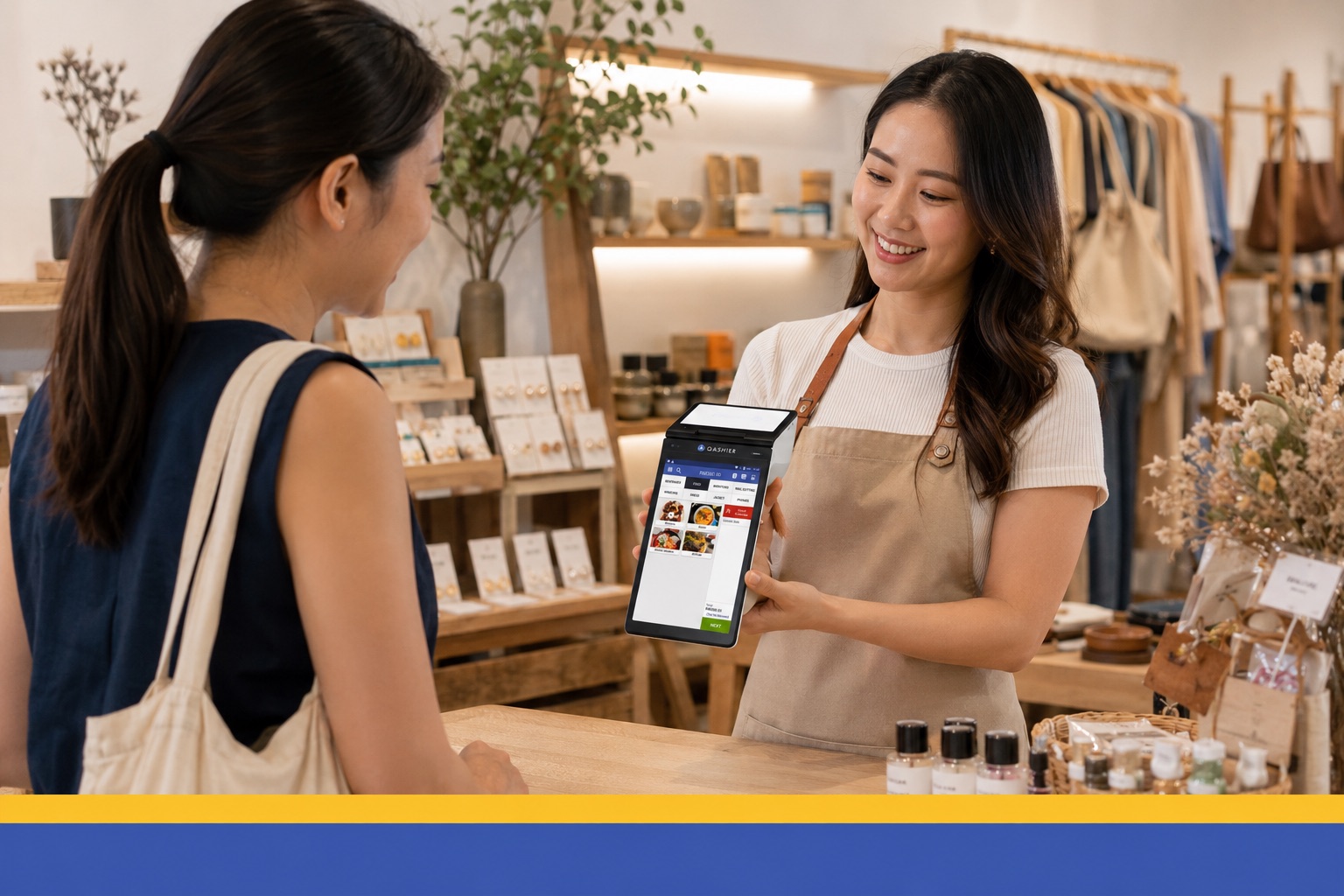
It is Tuesday afternoon at a home-goods shop in Nonthaburi. A customer asks if a ceramic bowl comes in blue. The staff member checks the POS, then the stock spreadsheet, then messages the owner on LINE, then waits. Four minutes later the answer arrives: yes, two left at the other branch. The customer has already gone.
Nothing went wrong with the staff. The problem is that the answer was spread across four tools.
You Do Not Have an Admin Problem. You Have a Handoff Problem.
Most Thai SME owners describe their evenings the same way: closing the shop, then sitting down to reconcile, update stock and reply to staff questions. It feels like too much admin.
But admin does not grow with the size of your business. It grows with the number of handoffs between your tools. Every time data has to be copied from the POS into a spreadsheet, or from a payment report into accounting, someone spends time and someone can make a mistake.
Four tools do not create four tasks. They create a web of connections, and each one needs a person to keep it in sync.
What the Same Tuesday Looks Like on One Platform
Now replay that sale on a single system. The staff member taps the item on the POS and sees stock at both branches instantly. The customer pays by Thai QR. In the same moment:
- Stock for that branch drops by one.
- The customer is enrolled in loyalty with their mobile number.
- The sale appears in today's report and the owner's dashboard.
- The customer is added to the right marketing journey automatically.
No one copies anything. No one messages the owner.
Closing the Day Once Instead of Twice
When your POS and your payment provider are separate, you close the day twice: once in the POS and once against the QR or card report. The numbers rarely match exactly, and finding the difference takes time.
When payments run on the same platform as your POS, every Thai QR, payment link and card transaction is already attached to its sale. You close the day once.
Reordering From a Stock Count That Is Actually Current
A stock spreadsheet is only as accurate as the last time someone updated it. Many shops reorder based on a count from last week, then find themselves overstocked on slow items and out of best-sellers.
With live stock deduction, every sale updates inventory as it happens. Low-stock alerts tell you what to reorder before the shelf is empty.
Knowing Which Staff Member, Which Outlet and Which Hour
When staff share one login, or when sales are recorded on paper and keyed in later, accountability disappears. Individual staff logins show who made each sale, refund or discount. A single HQ view shows performance by outlet and by hour, so you can staff the Friday evening rush properly.
Sending a Promotion to the People It Was Meant For
Blasting the same promotion to every LINE follower gets ignored. Better results come from messages triggered by behaviour:
- a welcome after a first visit
- a win-back when a regular goes quiet
- a birthday reward
- a reminder when points are about to expire
- a perk for your most loyal customers
These only work when your marketing tool can see your sales. On one platform, it can.
Seeing Your Second Outlet Without Driving to It
Opening a second branch in Bangkok traffic often means the owner spends half the day on the road. A cloud dashboard shows sales, stock and staff activity at every outlet from anywhere, and lets you move stock between branches without a phone call.
Everything Connects, Which Is the Whole Point
The value of one platform is not that each feature is better. It is that the handoffs disappear. Fewer tools means fewer subscriptions, fewer logins, fewer reconciliations, and fewer evenings spent on admin.
Getting Started
Qashier brings POS, payments, inventory, loyalty, marketing and multi-outlet management into one system built for Thai SMEs. Book a free demo and our Thailand team will map your current tools to one setup.
Frequently Asked Questions
Why does my business end up on so many systems? Most businesses add tools one problem at a time: a POS, then a payment terminal, then a spreadsheet for stock, then a LINE group for staff. Each solves one issue but adds a new handoff.
Is running multiple tools really more expensive? Often, yes. Beyond subscription fees, the hidden cost is staff and owner time spent moving data and fixing mismatches.
What payment methods does Qashier accept in Thailand? Cash, Thai QR / PromptPay (dynamic QR), payment links via Qashier Pay-By-Link, and credit and debit cards when used with a designated card device.
Do my customers need to download an app? No. Customers are recognised by their mobile number.
Can I manage more than one outlet? Yes. QashierHQ shows all outlets in one dashboard, including sales, stock and staff activity.
Can I move my existing data across? Yes. Our team can help you bring over products, stock and customer lists during onboarding.
How much does Qashier cost? It depends on your business type and number of outlets. Book a free demo for a recommendation.