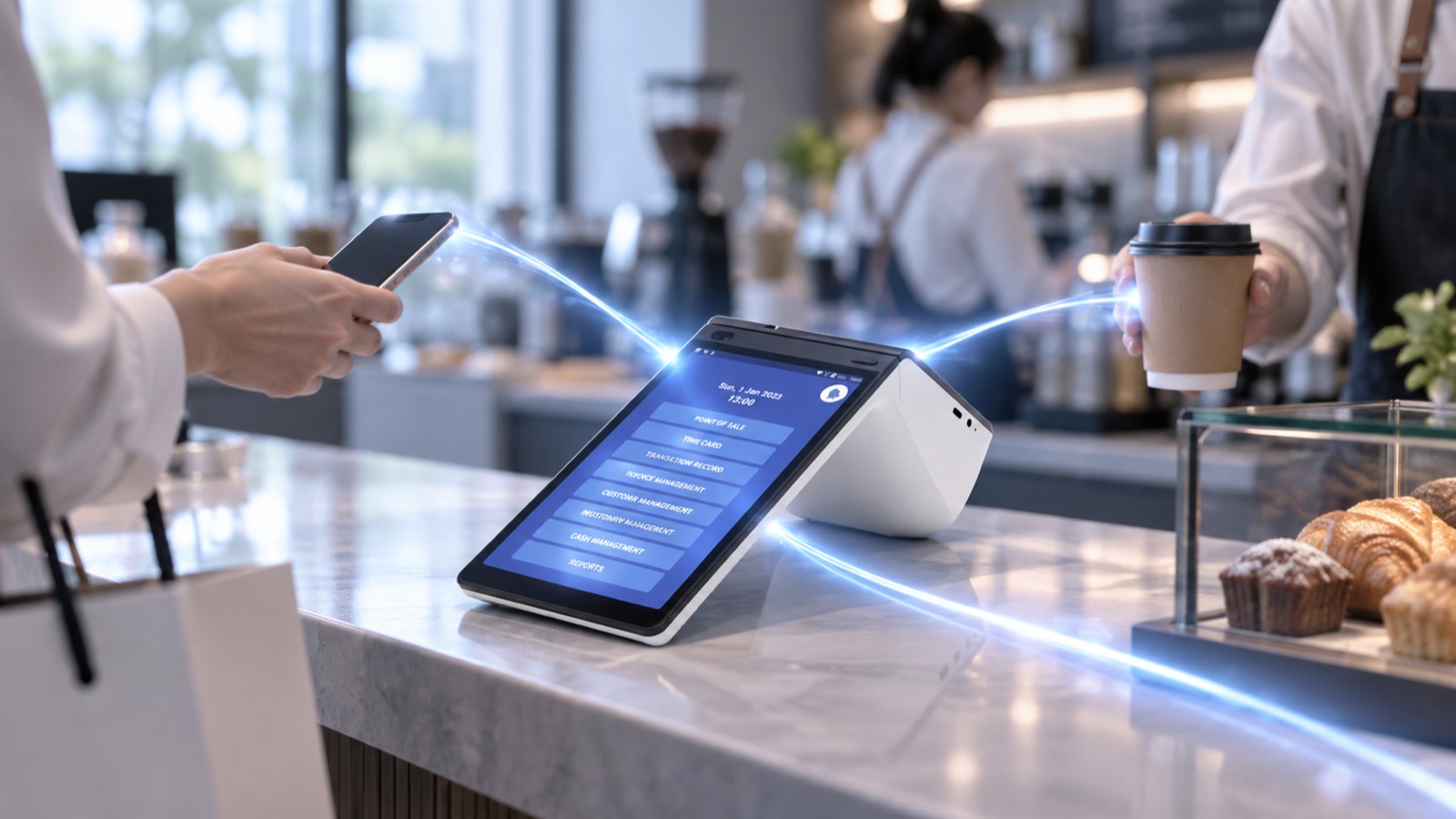
If you run a food and drink business or a retail shop, you will be familiar with using a POS system to run it and to take payment from customers. But although technology has moved quickly, most POS systems have not moved with it. Plenty of businesses have tried turning to technology on a phone instead, and most of them still end up back on the same old POS terminal.
It is not only new businesses that want to move to a smart POS; whole regions want to as well. Most of Scandinavia has already gone cashless, and even ordinary roadside shops use a POS that accepts every kind of payment. You can see the same cashless societies in China, South Korea, Australia and Singapore.
If you are wavering over moving to a smart POS, here are five differences between an old POS and a modern smart POS terminal.
1. Cloud versus local: an online cloud system against an internal network
Image Credit: Savvycom
Most old POS terminals are large and cumbersome and cannot connect to the internet, though they can still take cash and credit cards with the right add-ons. All the data sits on the local network, which means the manager or owner has to connect to the machine itself whenever they want to change something or check the sales.
A modern smart POS, by contrast, relies on a database held on the web or in the cloud. It can show you reports in real time, and you can reach your data anywhere, at any time, with nothing more than an internet connection. Changing products or prices can be done remotely, which saves you travelling from place to place to check the figures and fix whatever needs fixing.
2. The cost is different
Old POS systems usually carry very high costs to buy and to run: the terminal or hardware itself, software updates, training, maintenance, customisation, add-on equipment and a great deal more. All of it is money you have to spend on top, and it can run into tens of thousands.
And if the system has a fault or needs updating, an engineer has to come out and fix it — time lost from the working day, and more money gone.
A smart POS, on the other hand, usually works on a subscription, with the software updated automatically by the provider itself, so the shop has nothing extra to do. The subscription also covers the hardware, the software, training and support for the life of the device — and averaged out, it can come to no more than a few baht a day.
3. A modern POS terminal is far easier to use
Most old POS systems are rigid, awkward to work and take a long time to learn. If your business has a high turnover rate you are forever training new staff, and that training costs both money and time. With a smart POS system, on the other hand, working the system is much like using an app on an ordinary phone or tablet. A smart POS is designed and built to be easy and convenient to use, setting it up is straightforward, and the device itself is easy to move around, which makes selling more flexible.
Some systems, Qashier's among them, also have software made specifically for particular kinds of business. A food and drink business, for instance, gets a table management system where you can lay out the room and position the tables yourself, and take orders and payment right at the table.
The same system can help you run other parts of the business too: producing the sales reports you want, managing your staff, building a customer database, and running a loyalty programme.
4. The hardware is easier to work with
Old systems are rather awkward and difficult to use, and you have to fuss with add-on devices to accept several kinds of payment. They take a lot of learning, and the software is rarely updated.
With a smart POS, the equipment is usually small, versatile and easy to move.
At the same time, Qashier's modern POS system covers every part of the job and accepts a wide range of cashless payments: credit and debit cards, e-wallets and QR payment.
Qashier's devices also come with a barcode scanner, a receipt printer and a customer-facing display built in, at no extra cost — unlike an old POS system, where every one of those add-ons is something you pay for.
5. Security and backup
With a smart POS such as Qashier's, all your data sits in the online cloud, which is highly secure and requires a password to reach. An old system keeps its data on a network held on a hard drive, which is a risk: if the system fails, is hacked or is destroyed, everything is lost for good. A smart POS also backs up all your data automatically every day, so you can be confident it is safe.
As you can see, a POS terminal for shops from Qashier is an important piece of technology for the modern shop, because it lets a business work quickly, is easy to use, and comes with a full set of functions that answer what a shop needs, so you can run it efficiently. If anything is unclear, our specialists are on hand to advise you for as long as you use it. If you are interested in the product and want to move your retail business forward, contact us for more details on LINE Official: @qashier.th or call 02-506-1934