Cash may be out of fashion before long. That may sound overstated, but it is a useful reminder for any business to ask whether it is ready to step into the digital economy.
Go to a festival, shop for new clothes or buy so much as a single cup of coffee today and you may well not use cash at all. That trend matters a great deal if you run a business, because it means choosing a POS terminal that can take cashless payments — e-payments and e-wallets.
A bright future for the POS terminal
Figures for the global POS terminal market forecast growth from US$25.24 billion in 2022 to US$70.75 billion (roughly 2.49 trillion THB) in 2029, driven by demand for smart POS terminals that answer what consumers want and make business faster and more convenient. That is pushing merchants to wake up and upgrade in earnest, so Qashier has gathered the five shifts that every business should know about in order to move into a cashless society properly prepared.
Five reasons businesses are turning to POS terminals
1. Cash may be losing its importance in Southeast Asia
The future of retail lies in digital payments. According to Juniper Research, the digital payments market will be worth US$4 billion by 2027, double what it is today, and the research house further reports that half of all transactions will come from digital wallets or from devices such as smartphones and smartwatches.
Digital wallet users worldwide are also expected to reach more than 4.4 billion by 2025, up from 2.6 billion in 2020 — driven in no small part by the continued growth of super apps, which keep nudging people towards digital money.
Southeast Asia is an important market for e-wallet technology, given how sharply it has grown. It is the region with the fastest-growing population in the world, and it has taken to technology enthusiastically, accounting for more than half of global internet usage.
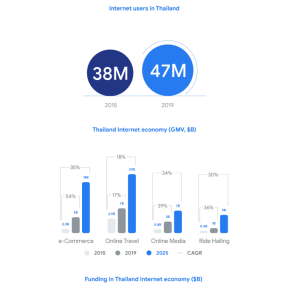
Mobile wallet usage has grown by 311% since 2020, to a total of 440 million users across Indonesia, Malaysia, the Philippines, Singapore, Vietnam and Thailand — figures that also reflect just how much e-commerce has grown.
According to an e-commerce market volume study, the country with the most mobile wallet users is Indonesia, with 74.9 million.
All of which shows that as people move towards digital payments, businesses need to adapt to take them — and a POS terminal or shop management system that supports cashless payment is very much part of that.
2. More people using apps
Google's Economy Report finds that Southeast Asia continues to show steady growth in the number of people using their phones to pay for everyday things, from hailing a taxi or a Grab to ordering food — and paying by phone in restaurants and shops too.
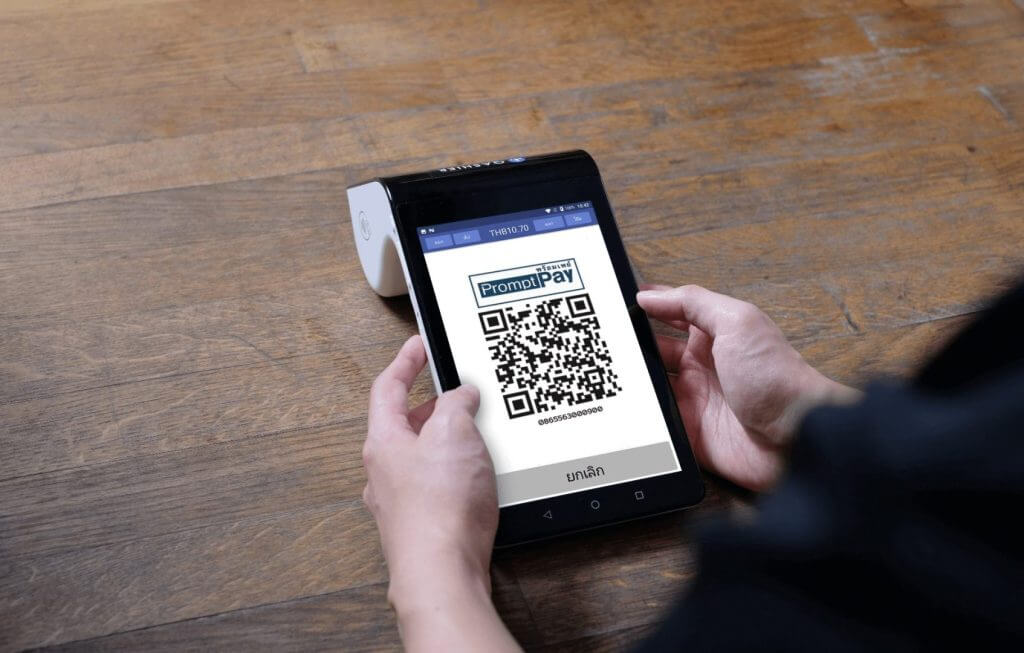
Contactless payment systems such as PromptPay have made paying by phone easy to reach and convenient, because a smartphone user can complete a transaction more easily than digging a card out of their wallet.
Growth in smart POS terminals is itself an important driver of e-wallet usage across Southeast Asia, and terminals such as QashierPay, QashierX1 and QashierXL take every form of payment on a single device — convenient for customers who want to pay through whichever app they use, and for merchants who can then meet what their customers want.
The Southeast Asian POS market is set to reach US$7 million (roughly 251 million THB) by 2027, growing at 16.56% from 2022 through to 2027.
Google Trends searches for smart POS over the past five years show that people are aware of the new technology and interested in using it to raise their businesses' game.
3. Growing QR payment usage in Southeast Asia
According to research into QR code payments in Southeast Asia, 34% of survey respondents had used QR code payments, and as many as 50% of Malaysians are already using them.
The figures also show steady growth in the number of shops accepting QR codes, to make running the shop more efficient and to serve customers better. Modern POS terminals make it easy to generate a QR code and let customers scan to pay or to order.
QR ordering — scanning to order food — also makes a shop more efficient, particularly a restaurant, where it reduces order errors and cuts down the distance staff have to walk.
QR codes also increase the interaction between a shop and its customers, by letting them scan through to the shop's online channels or social media, scan to claim a special offer, or scan to leave feedback.
Beyond that, QR codes can help a business respond to government policy.
In Thailand, for instance, the central government has pushed QR code adoption through PromptPay to stimulate the economy and improve security. At a regional level the governments of Thailand, Malaysia, the Philippines and Singapore are working on plans to link their payment systems across borders, so that people can pay with their own QR system easily even when they travel. A good POS terminal will play a substantial part in supporting that considerable change.
4. Loyalty programmes are playing a bigger part
Loyalty programmes — the work of maintaining the relationship between a shop and its customers — matter a great deal in Southeast Asian retail. Research indicates that loyalty programmes make customers 86–92% more inclined to choose a particular shop, which is why owners are putting so much weight on building and improving them.
Businesses and shops are making the most of this trend by designing marketing activity that gives customers flexibility and value: discount points, credit card points, or special bonus points to encourage customers to visit and come back again.
Owners across Southeast Asia are experimenting with new ways of using loyalty programmes. Some retailers offer a discount on the electricity bill for paying in advance, while partners working with telecoms operators may offer extra data or a cheaper mobile package to long-standing customers, managed from their customer records.
To keep your business up with the loyalty programme trend, click on smart POS solutions for more on using reward points and special promotions in your business.
5. Smart POS systems are far smarter than they were
With better technology, merchants can use a POS system to manage inventory and even to handle loyalty programme rewards automatically — which is not quite how a POS system used to work.
These systems let their users manage revenue streams and check inventory at any time. And because many merchants now trade both online and at a physical counter, making transactions across the channels tally with the day's sales is essential — so Qashier's smart POS, with its integration built specifically for e-commerce businesses, helps merchants quickly.
Major industries such as fast-casual dining — the newer style of food business that combines speed with quality — have driven POS growth considerably, because demand for paying by phone and ordering online or by QR has risen sharply in food. That has pushed merchants to move from ordinary payment systems to online ones through a POS terminal.
Broader market factors — online payment in retail, rising middle-class household incomes, easier investment and easier shop openings, and more businesses opening in general — all help the POS market grow. Adding a smart POS to your business is therefore both a technological advantage and a positive for its revenue.
Qashier is a modern shop management system that is easy to use and has a full set of functions for restaurants, and it runs restaurants both small and large effectively, with back-office data you can reach anywhere at any time. We also have specialists on hand to help and advise you throughout. If you are interested in our products and want to push your restaurant business forward, contact us for more details on our Line Official account: @qashier.th or call 02-544-0267