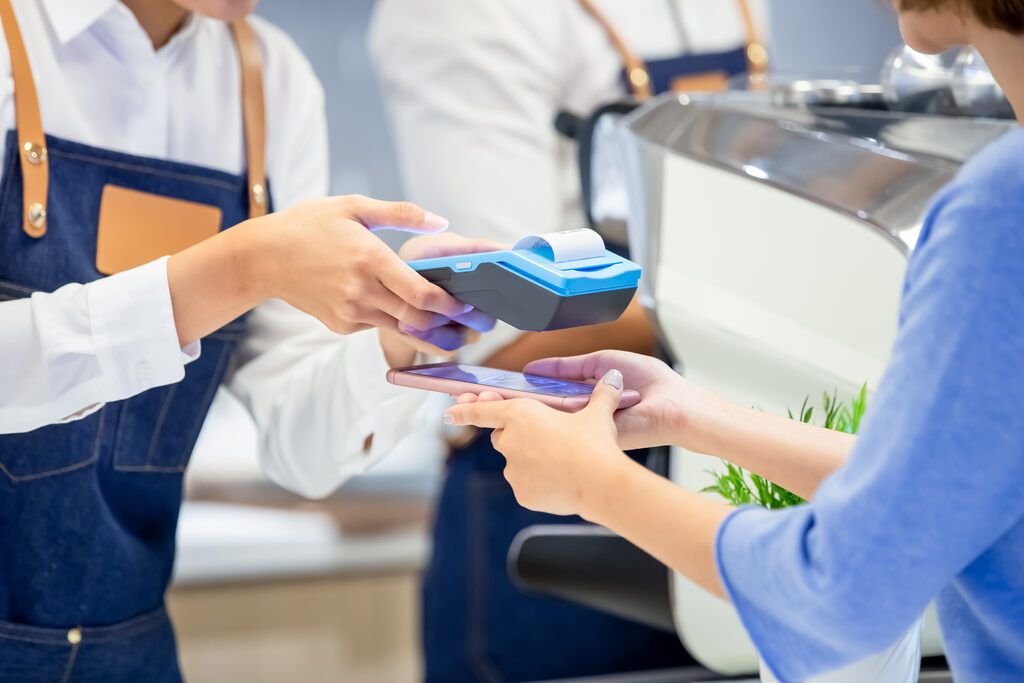
For anyone running a shop — a restaurant, a grocer's, a clothes shop, a furniture shop, a builders' merchant, whatever it may be — the familiar picture is much the same: stock checked by hand, counted and written down or guessed at by eye; a trusty calculator to work out the total; cash the only form of payment; and a handwritten cash bill as the customer's receipt to take home.
But now that technology plays a far bigger part, there is more than one way to run a shop: the traditional method, or online POS software brought in to make everything more convenient. Each has its own advantages.
So does an online POS really have more going for it than the traditional way we all know? And is putting internet into the shop so that you can run an online POS as worthwhile as everyone says? This article compares the two on every point that matters. Read on.
How data is kept
Running a shop these days, simply trading may no longer be enough to grow the business and beat the competition. You also need accurate data to draw on, so you can refine and develop your products or services to serve customers better. And here the traditional approach and an online POS differ considerably.
The traditional way
Keeping records traditionally comes down to writing them in a ledger or saving a file on a computer. When you want to use that data or analyse it, it is difficult and time-consuming — and more prone to error than an online system.
An online POS
Keeping records through an online POS is straightforward: key in the data, follow the prompts, and the POS stores and analyses it accurately for you — sales, product lines and the stock you have left — which makes it easy to build on and to plan your marketing with.
Taking payment
Payment is another part of running a shop where mistakes have to be kept to an absolute minimum, so that customers trust you. The two approaches differ as follows.
The traditional way
Traditional payment means the cash we all know. You can also take a bank transfer to an account number, or print a QR code and stick it up at the counter so customers can scan and pay on the spot. But if you want to total up the day's sales, there is nothing for it but counting the money and writing it into the ledger.
An online POS
An online POS handles every form of payment — cash, transfer, credit card, debit card or any other online transaction — which guards against errors in the total and makes sure every last satang is collected. Selling, totalling, printing receipts and summarising the day's sales across every branch all happen in one system.

Features
Features are at the heart of any shop management setup. Whether you go for online POS software or the traditional way of ringing things up depends on what your particular shop needs. Here is the comparison.
The traditional way
Running a shop the old way means the owner doing everything themselves, at full stretch — selling, totalling, writing bills, checking stock. The process is not complicated and you can change how you run things as you please, but it certainly takes more time than an online system.
An online POS
Online POS software has the advantage of intelligence built in: managing orders, managing stock, membership schemes, payments, sales analysis, promotional programmes, and updating data across every branch in real time. One device covers the whole of running a shop.
What it costs to set up
Cost of setup is another factor an owner has to weigh, because putting a shop management system in place is a form of investment. Here is what each approach costs, as something to base a decision on.
The traditional way
Totalling up and running a shop the traditional way costs almost nothing: stationery, a calculator and a ledger, and that is about it. It suits a shop working with little capital, or one just starting out. If you use a traditional POS terminal, however, there are setup costs and a great deal of expensive equipment to buy up front.
An online POS
The cost of setting up an online POS comes down to installing internet and buying the POS software. Internet is something every shop needs anyway, and the POS is installed once and then used for years — which makes it a genuinely worthwhile investment.
In summary: which approach suits whom?
The traditional way
From everything above, we can conclude that the traditional way is one most people know, easy to use and uncomplicated, but it cannot process data automatically and turn results into improvements to the shop without real effort. It also carries a risk of mistakes and of dishonesty among staff. So it suits a small shop where the owner looks after everything personally.
An online POS
Online POS software, on the other hand, is not only convenient but lifts the look of the shop to something more professional, reduces staff error and draws in more new customers. It suits mid-sized shops through to large businesses with several branches, letting you manage every shop from anywhere, at any time, with nothing more than a device connected to a POS system that links all the branches together. It is also updated regularly, so it keeps pace with the way things change.
The comparison shows just how much an online POS has going for it and how well the investment pays back. We suspect a good many owners now want online POS software in their own shop. If you are looking for effective POS software and a shop management system, choose Qashier — an all-in-one solution for running a shop, covering payments, stock checks, membership schemes and staff management, supporting your business at any hour, easy to install and easy to use, and kept running smoothly by a support team available seven days a week. For more information, contact our LINE Official: @qashier.th or call 02-544-0267